Architecture
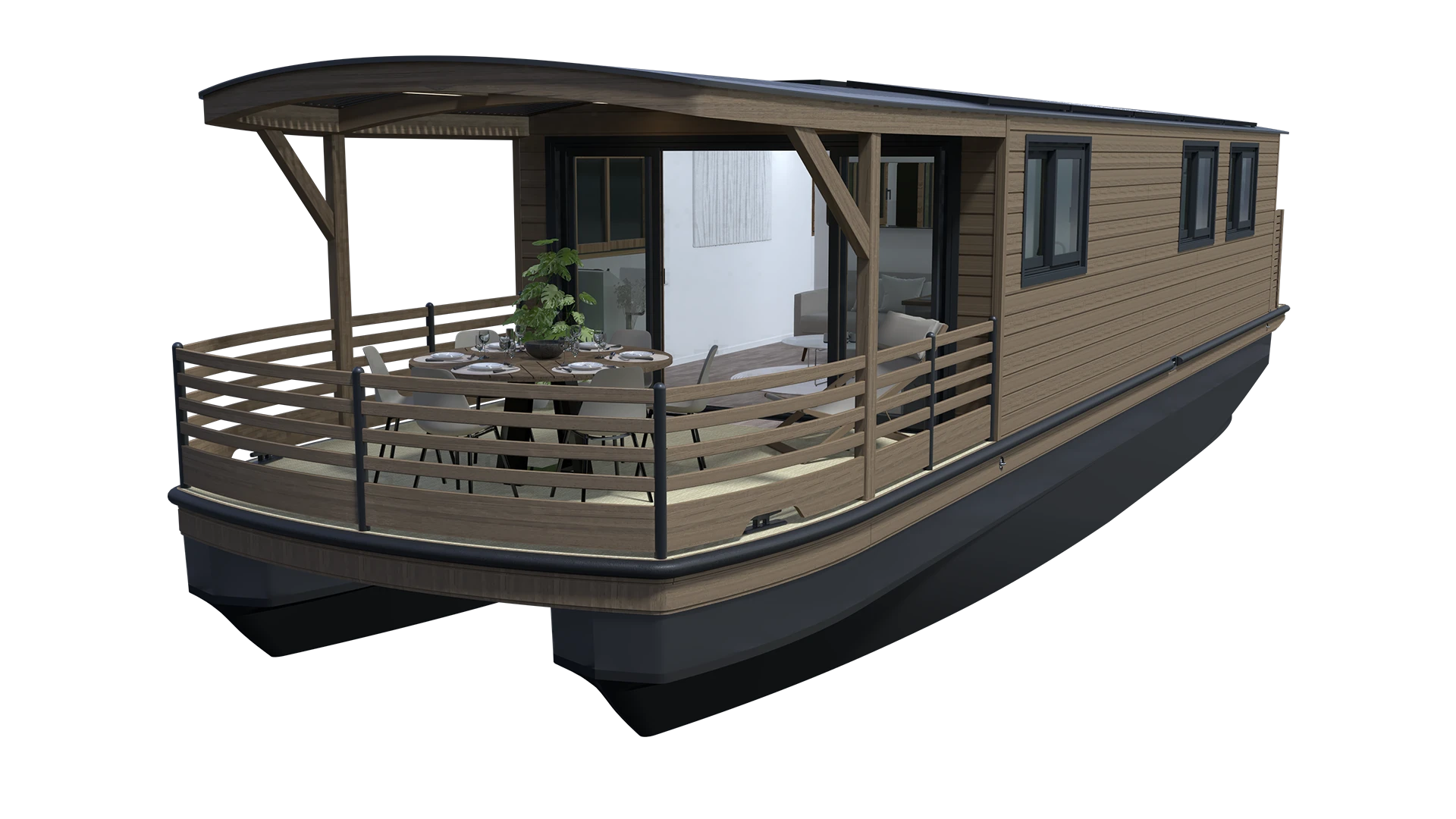
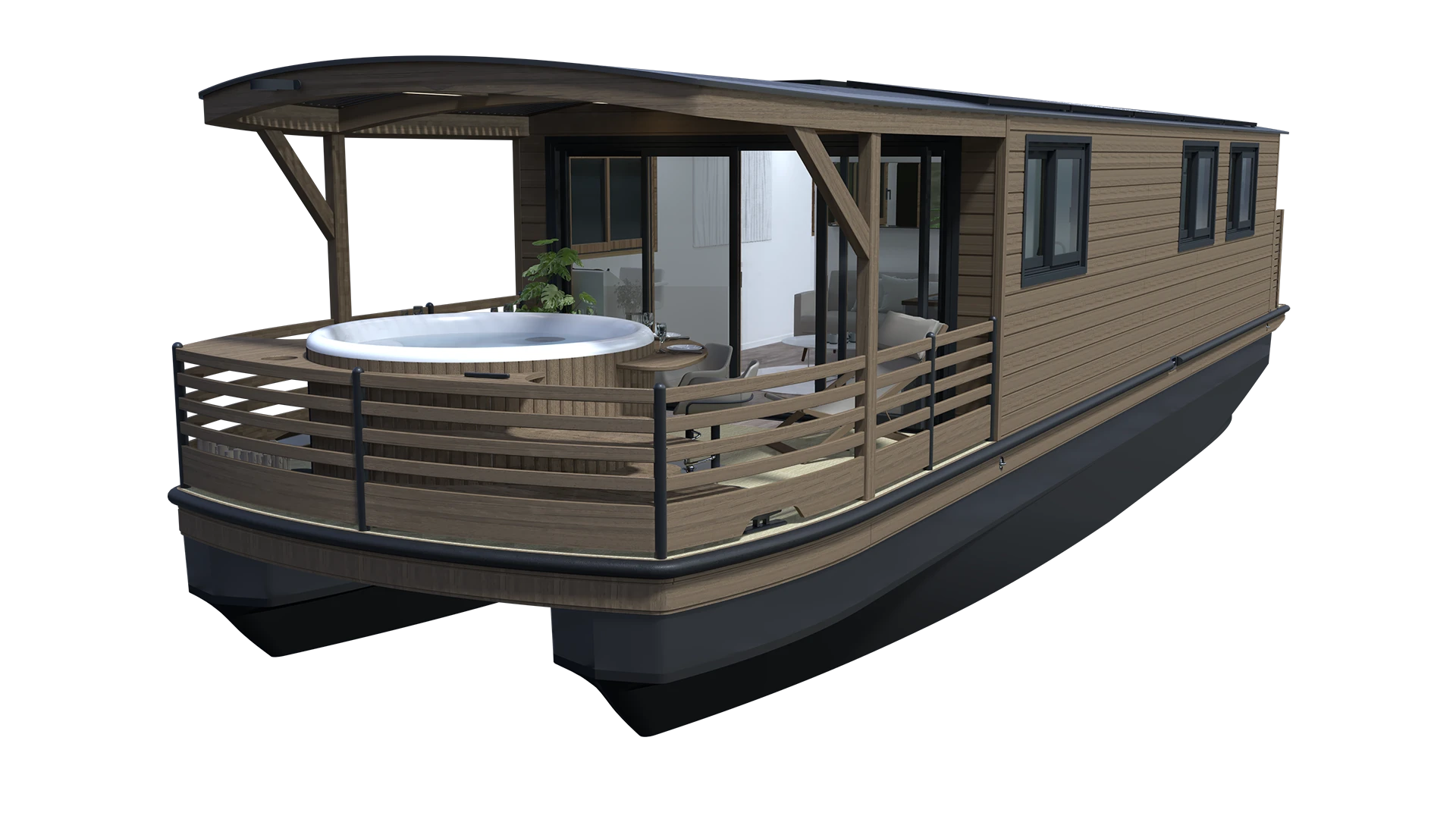
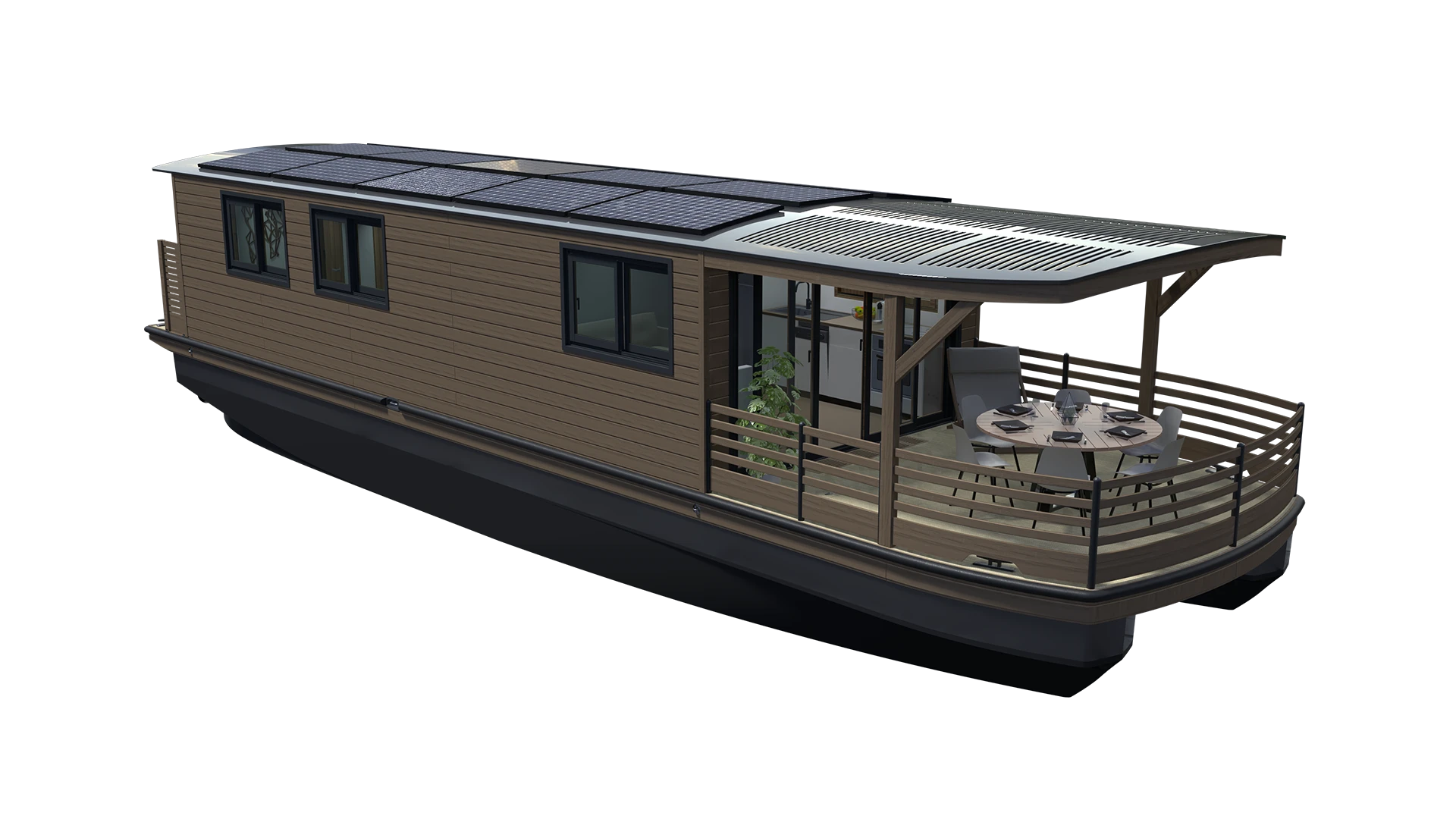
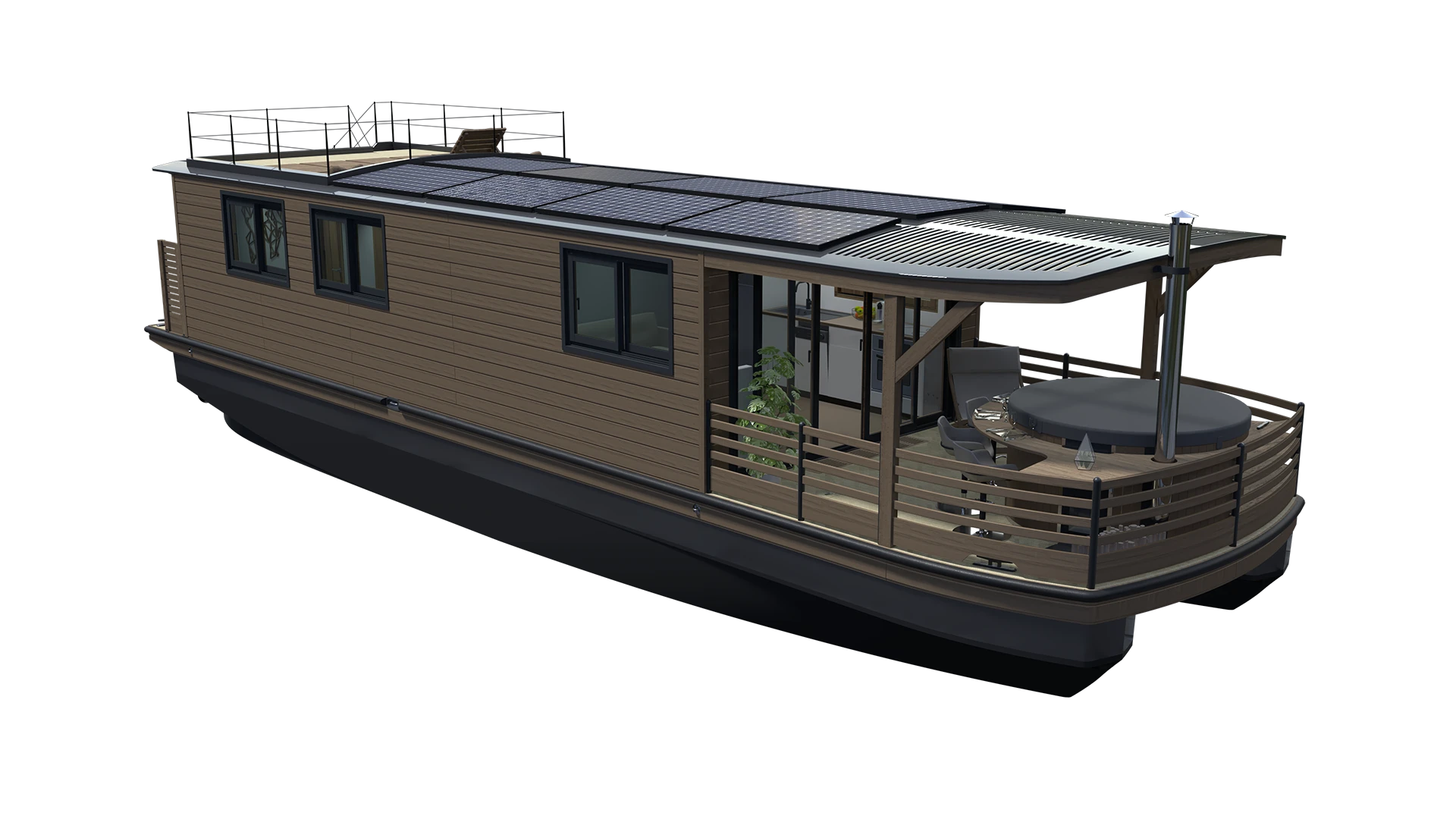
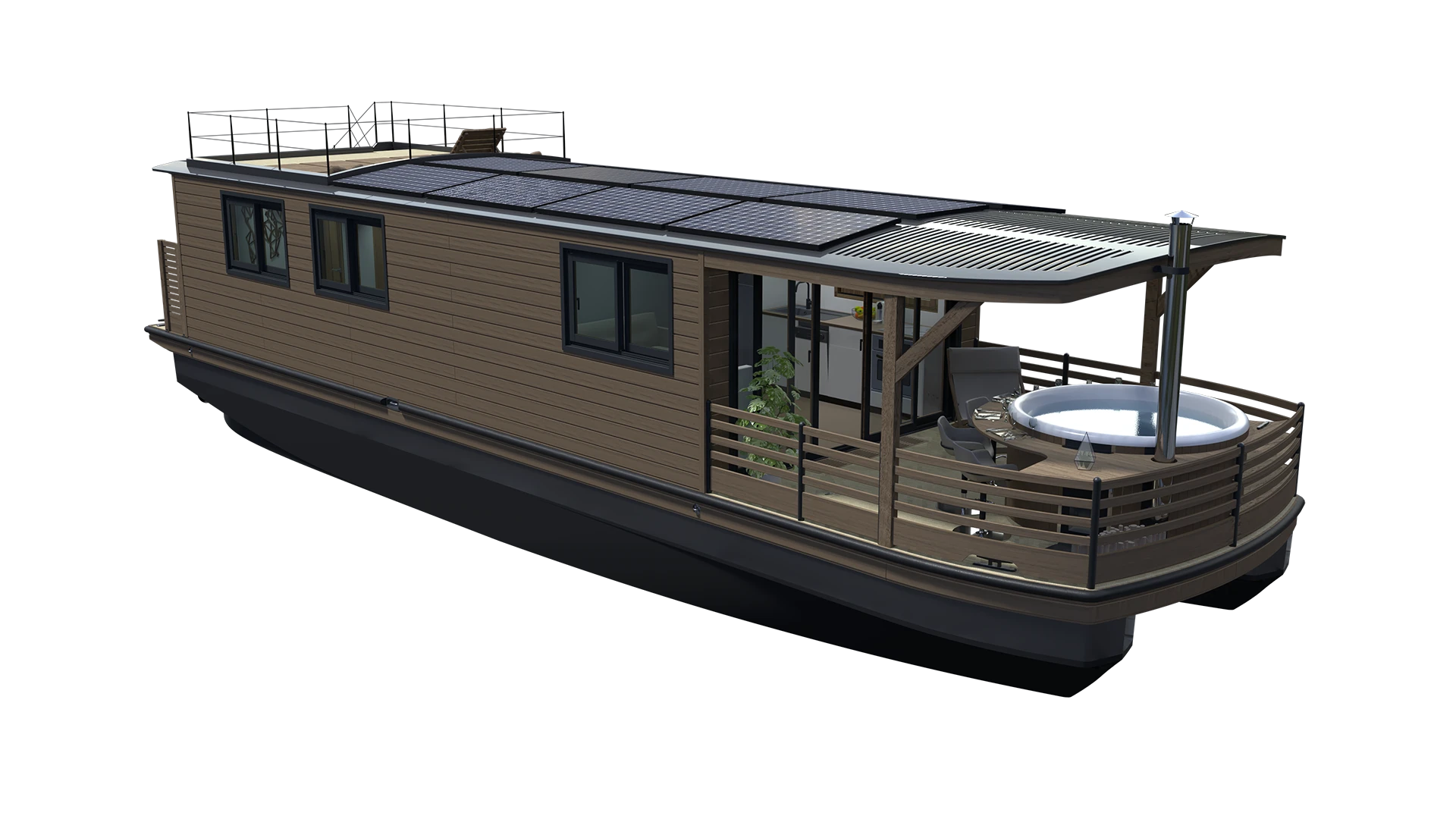
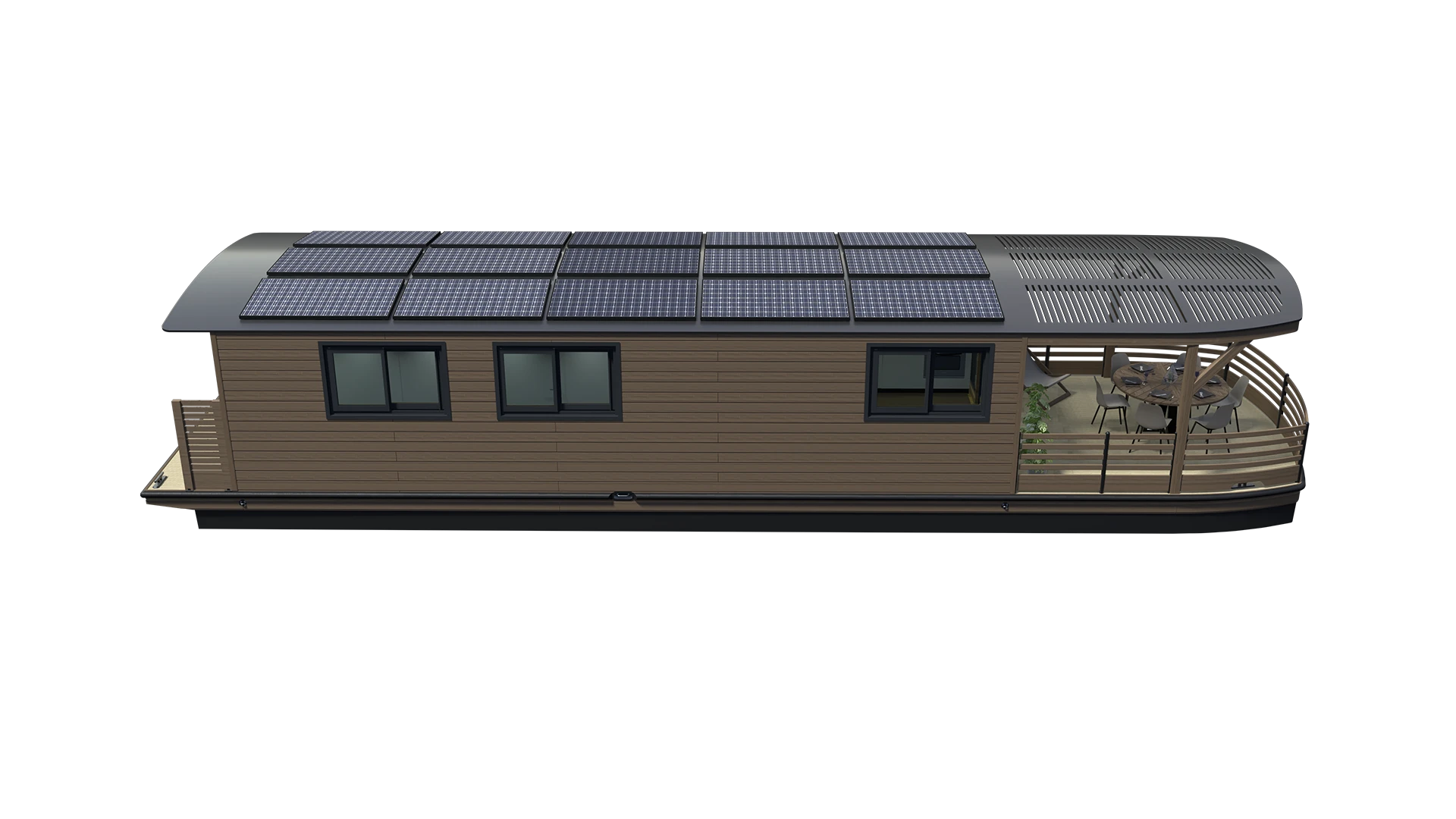
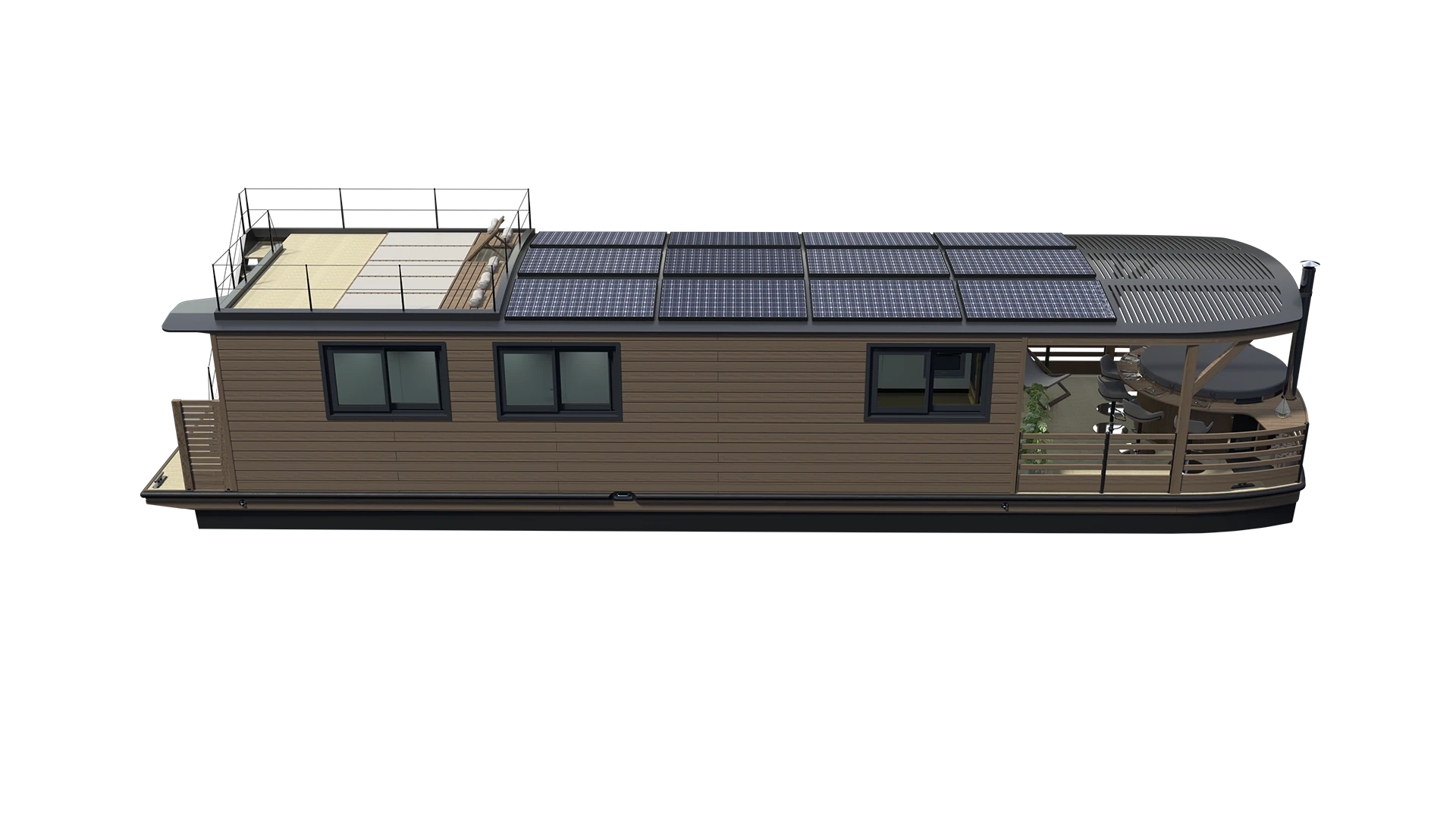
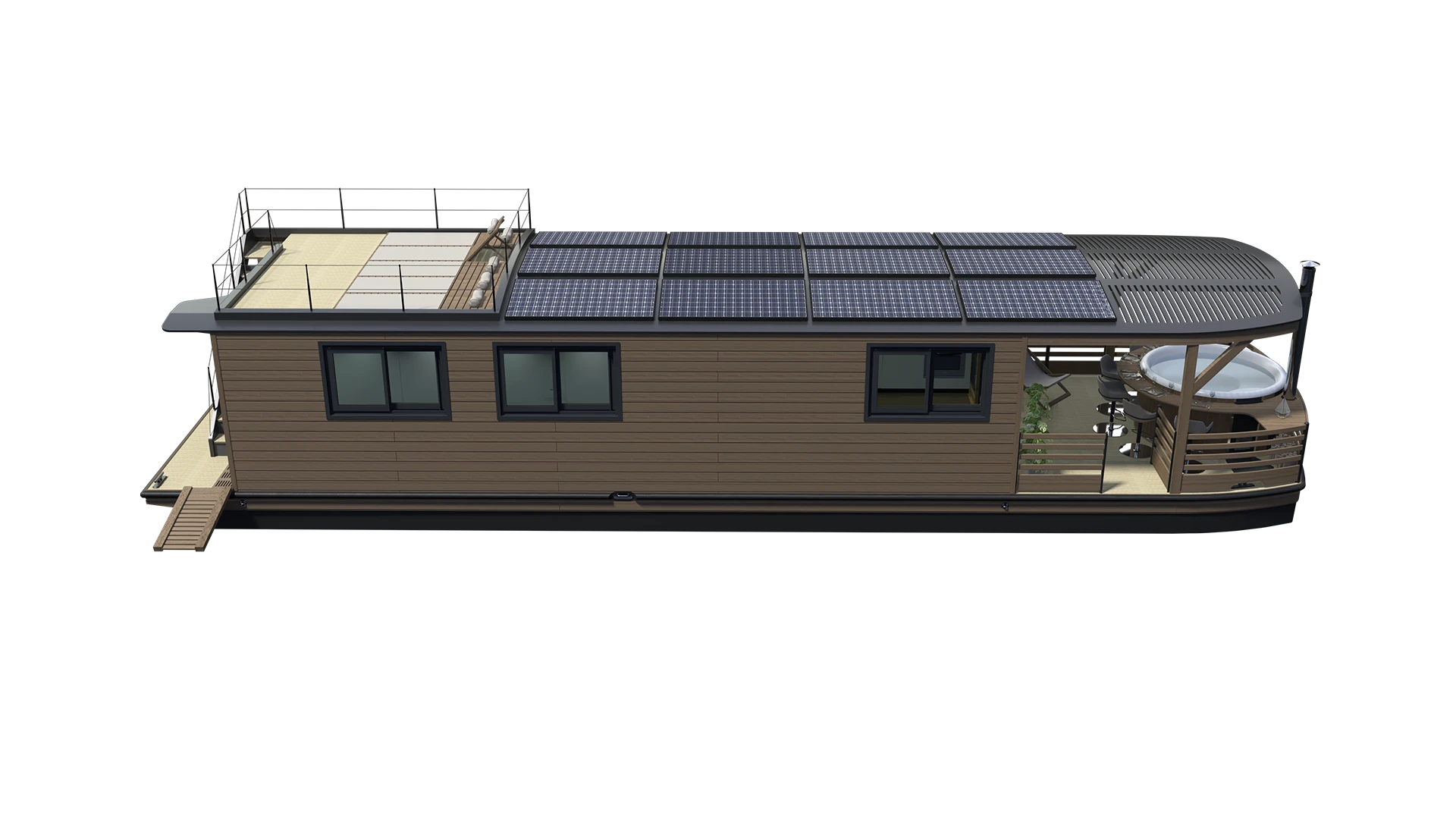
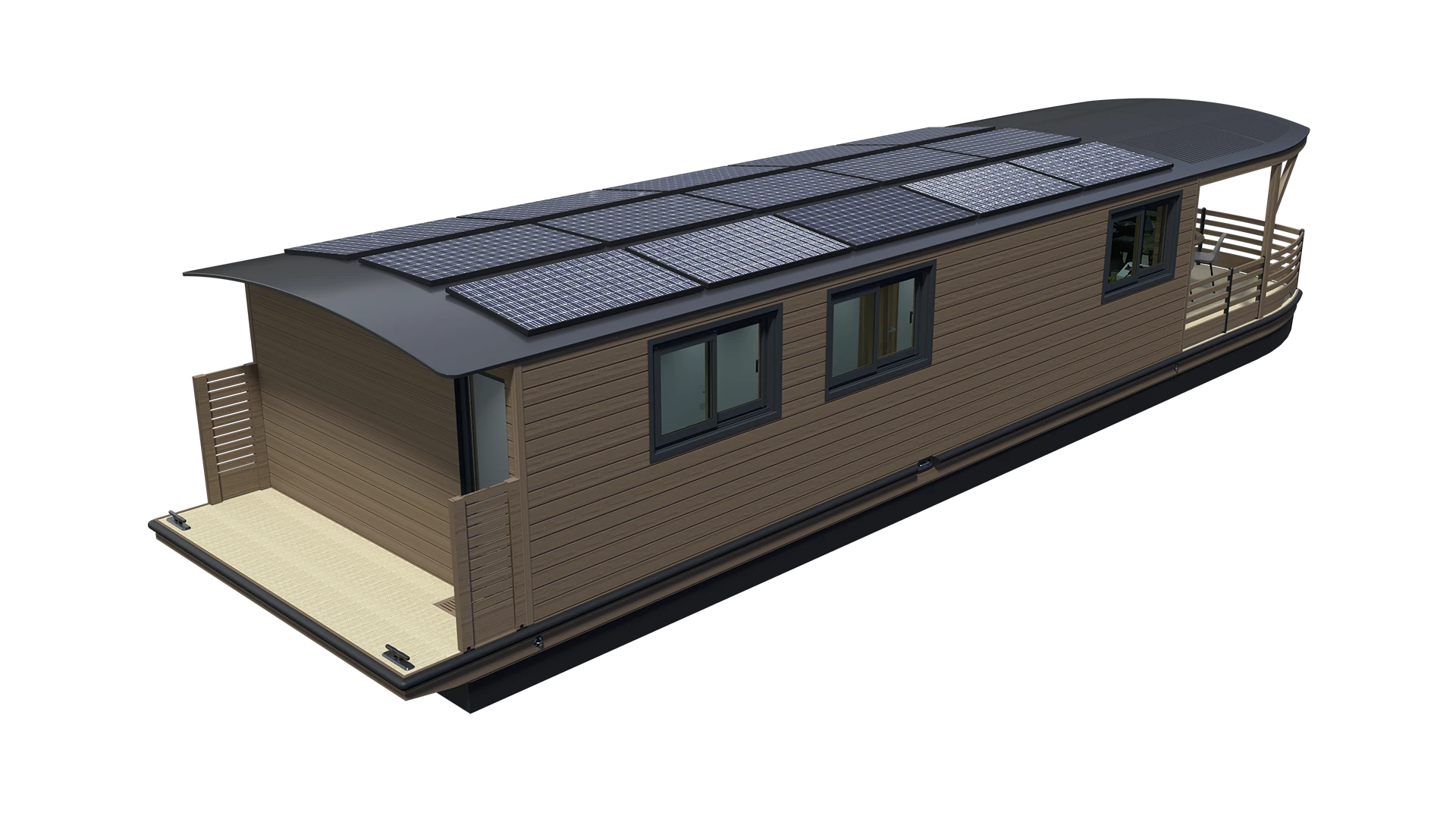
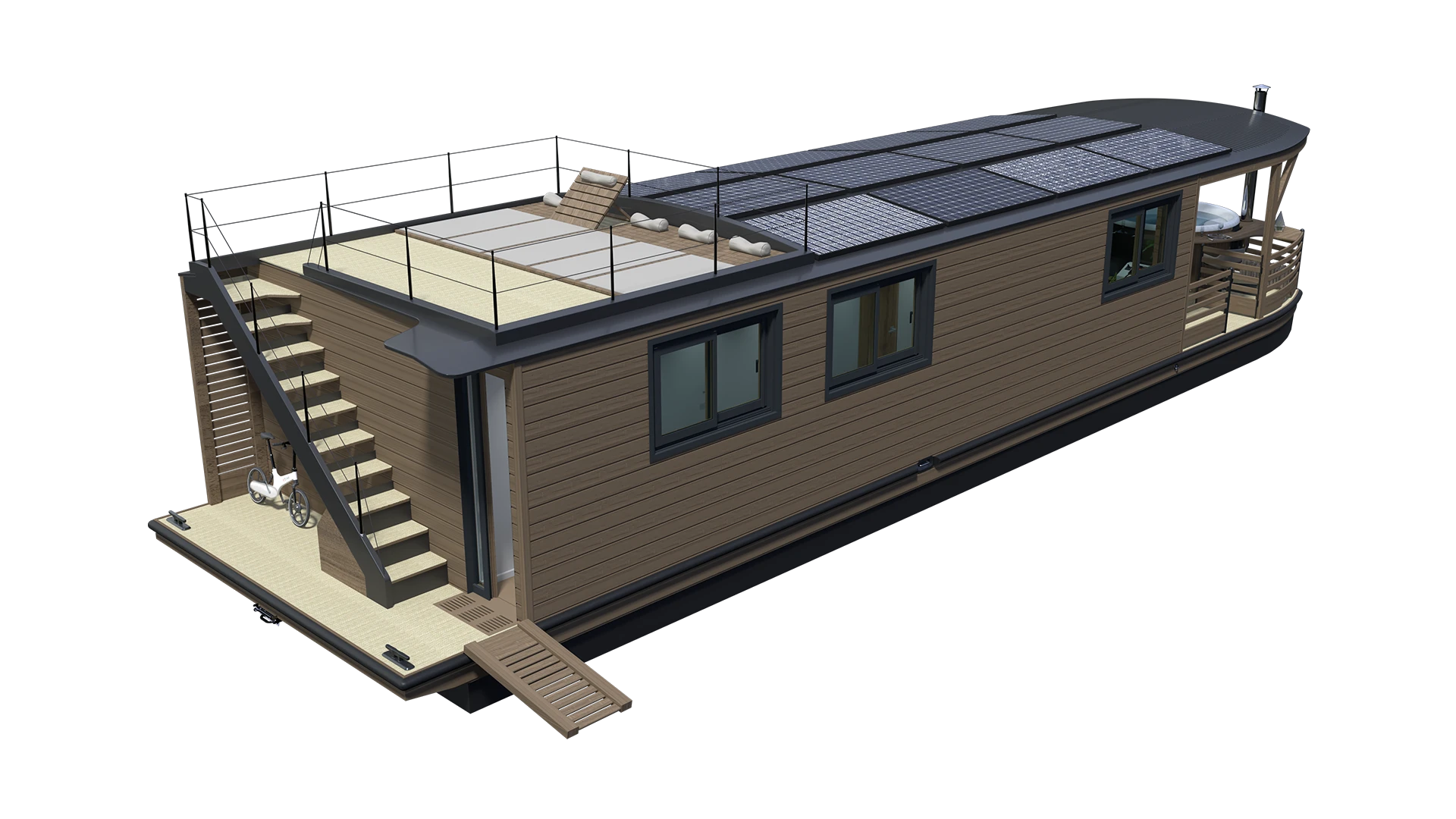
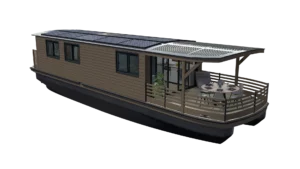
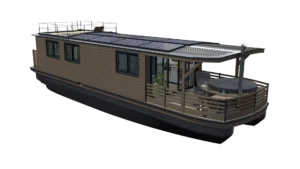
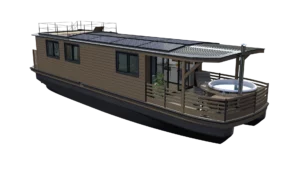
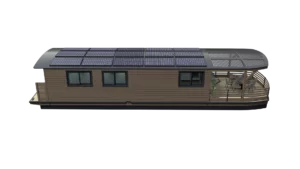
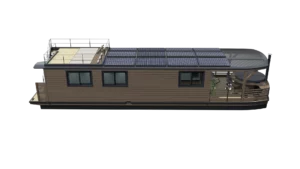
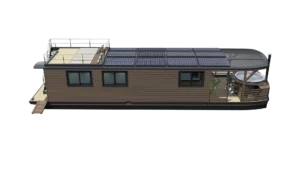
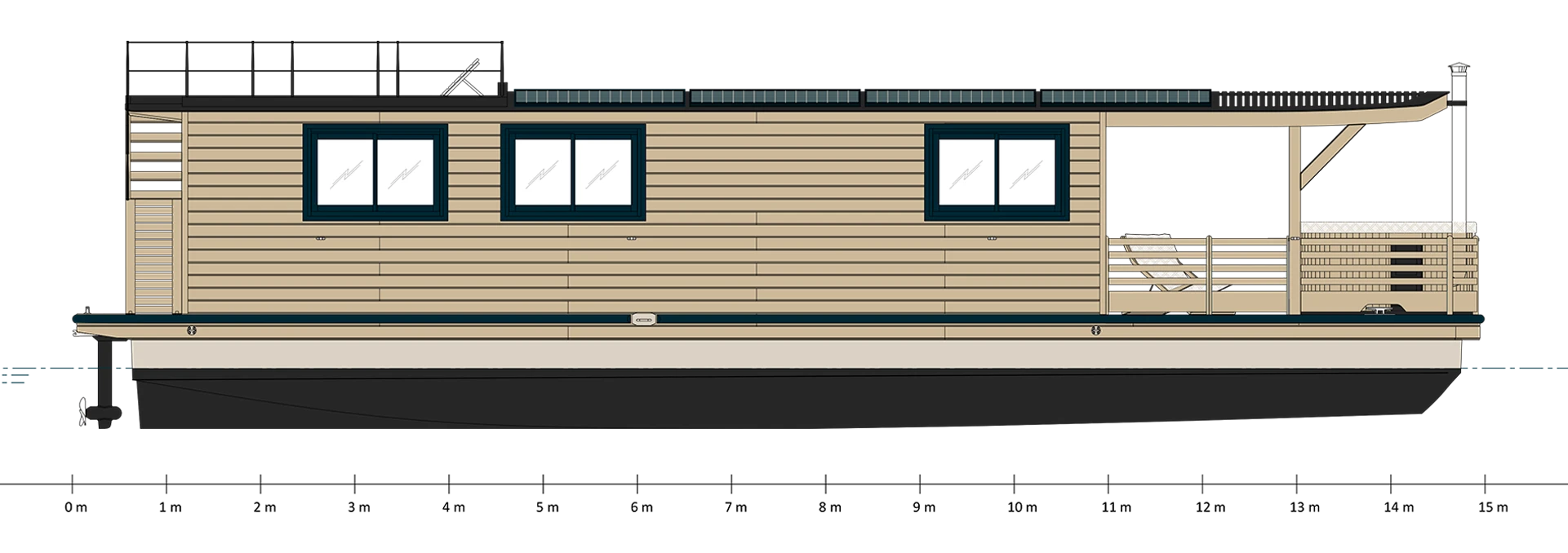
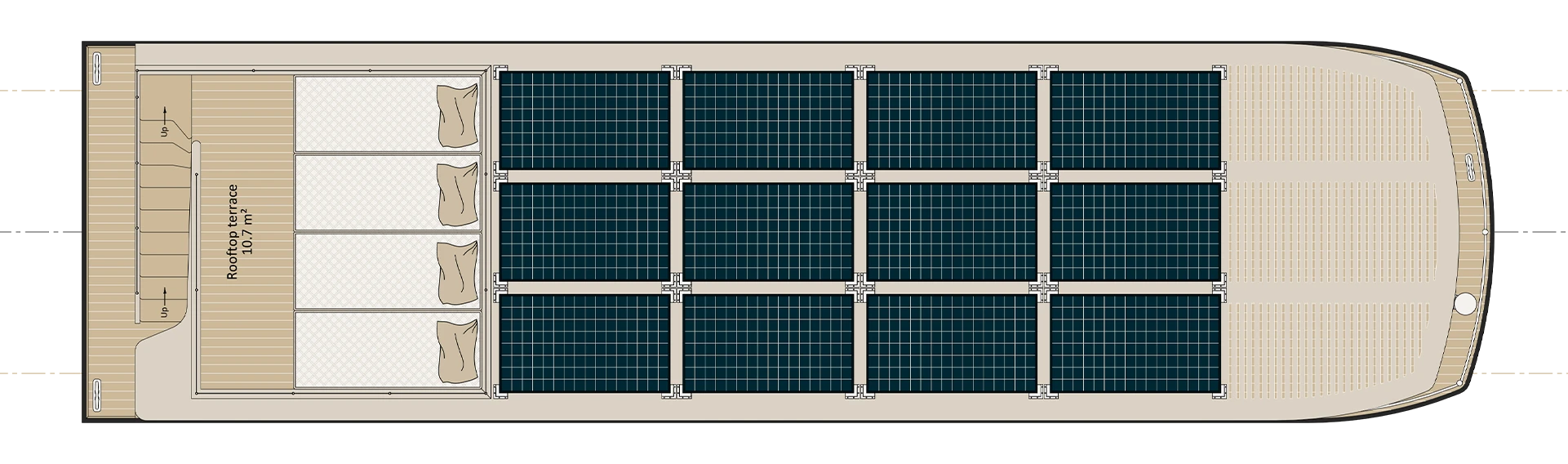
The desire to sustainably reduce the boat’s environmental footprint guides many of the design choices. Electric propulsion is combined with photovoltaic power generation designed to meet both domestic needs and those associated with navigation, providing several days of autonomy without an external power source. This commitment to sustainable mobility is further enhanced with the integration of a small wastewater treatment system, while carefully selected bio-based insulation, combined with a thermodynamic water heater and reversible heating system, helps limit energy consumption while ensuring consistent comfort year-round.
This approach is supported by a construction strategy in which each material has been selected for the qualities it brings to the programme. The HDPE floats are designed to withstand the demands of intensive rental use thanks to their impact resistance, ease of repair, and naturally antifouling properties. They support an aluminium structural platform designed to connect the hulls while simplifying the construction of the overall structure.
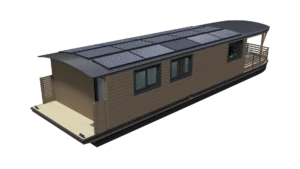
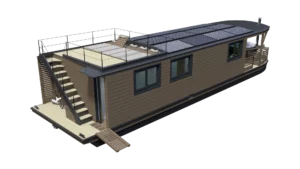
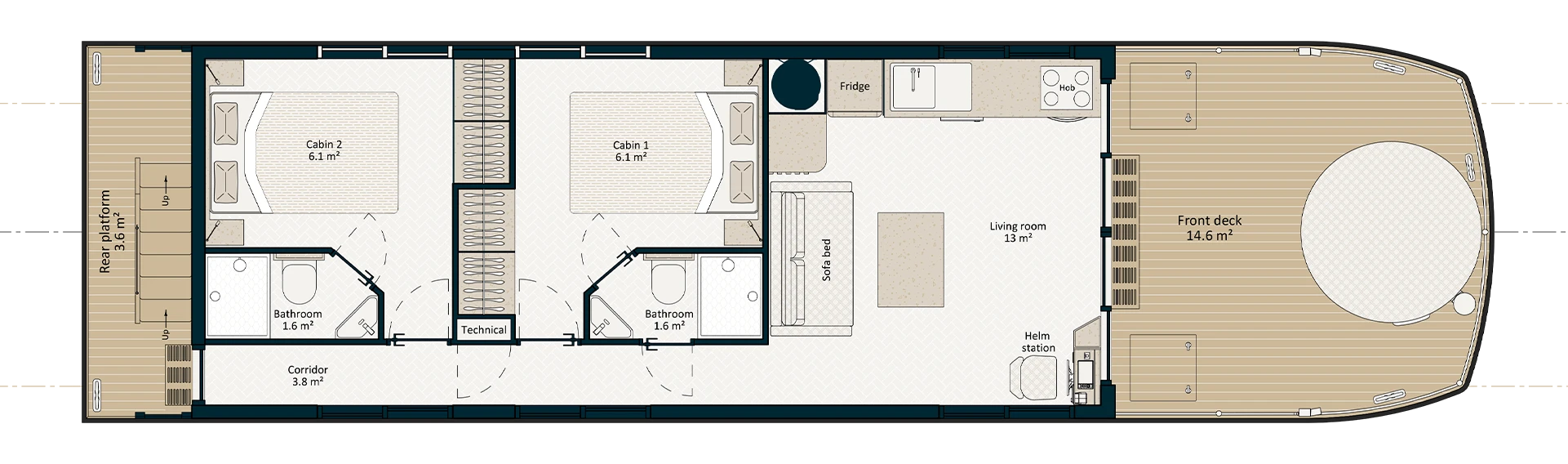
Above this platform, the living module follows the principles of wood-frame construction, providing an efficient, durable and straightforward-to-build envelope while bringing the boat’s quality living experience closer to that of a contemporary home.
The solid wood cladding extends this construction logic into the architectural expression. The curved roof, meanwhile, responds to the constraints of the river network, complying with its most demanding clearance requirements while naturally enhancing the structure’s overall rigidity and water runoff. The exposed structural roof frame extends this architectural concept into the living spaces, where it contributes to the project’s warm and distinctive character.