
Far more than just a simple analytical tool, CFD (Computational Fluid Dynamics) enhances the understanding of the dynamic environment in which each yacht operates. By analysing the interactions between water, air and the hull, it allows to decrypt complex fluid mechanics, where each element influences the others.
Central tool in our design method, CFD reveals subtleties often imperceptible, but decisive, that allow us to adjust comfort and performance with precision and efficiency.
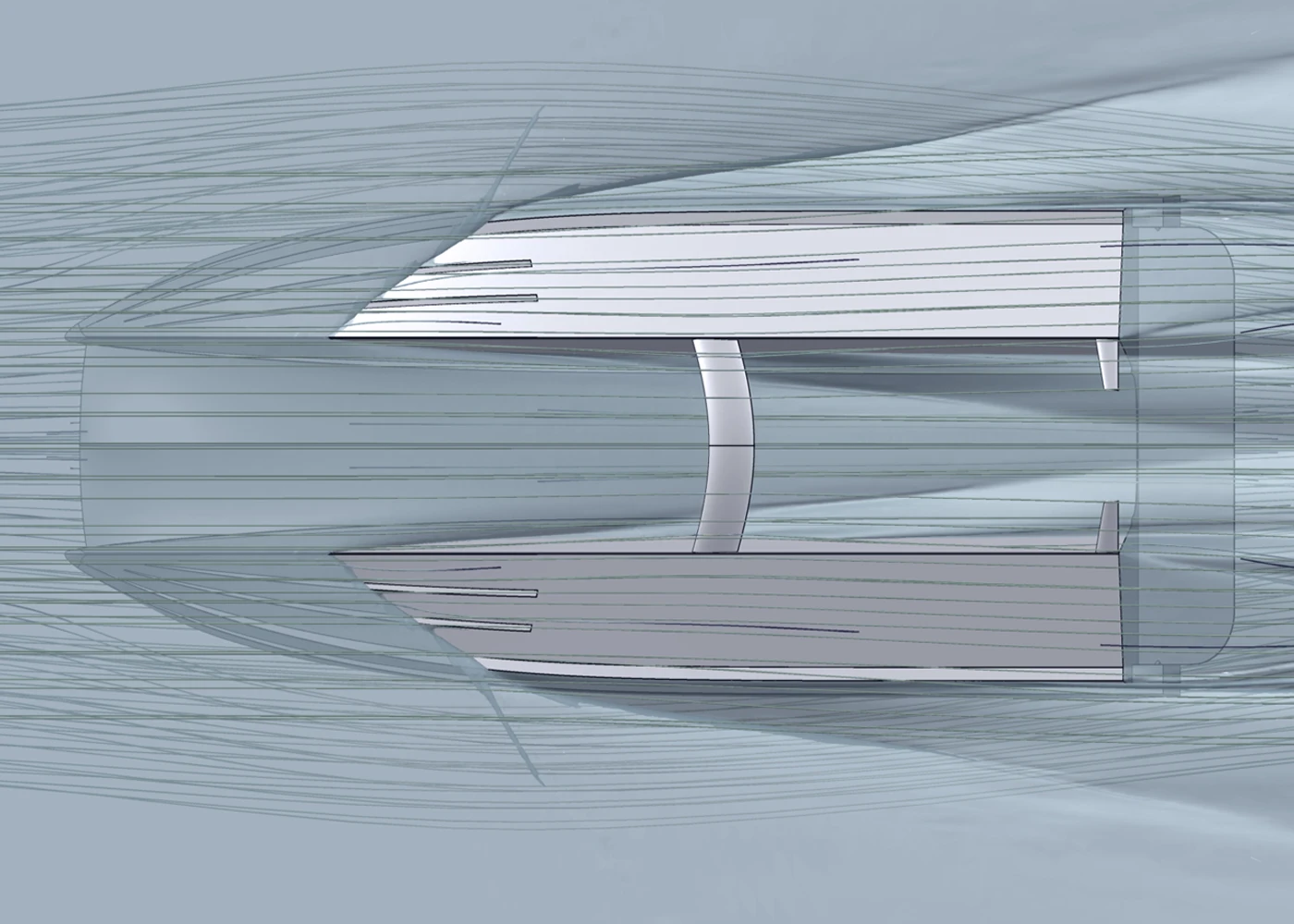
Imagine observing water gliding along a hull, visualizing the current lines, identifying dynamic interactions, tracking the slightest vortex, and perceiving the influence of air on the superstructure. With CFD, this vision is no longer a dream, it becomes reality.
Coupled analysis of aerodynamic and hydrodynamic phenomena enables a detailed understanding of the interactions between water, air and hull geometry. It highlights key elements such as wetted surface, pressure distribution, drag areas, streamlines and recirculation effects.
Where most CFD studies are limited to providing numerical results, our internal approach goes far beyond. We interpret each value, contextualize the data through our experience in design offices and navigation, and draw concrete ideas for improvement. Each data becomes material for reflection, each observation an opportunity to challenge the design, explore innovative solutions and optimize the hull with the ultimate goal of always doing better.
Our methodology relies on a virtuous cycle: analyse, propose, test, adjust… and repeat as often as necessary. This requirement, combined with expertise in VPP (Velocity Prediction Programs), allows performance evaluation across various wind, load or heading scenarios. It also validates the behavior of appendages such as foils, daggerboards, rudders and refines propeller design to maximize propulsive efficiency.
This difference in interpretation, this capacity to propose solutions and this precision of execution turn intuition into certainty and performance into a fluid signature.
Beyond flow optimization and drag reduction, CFD provides valuable insight into the analysis of the yacht’s dynamic behavior. By simulating the complex interactions between hull, sea and air, it allows to predict movements in various conditions, enabling the evaluation of roll, its ability to navigate in rough seas, or even measure the impact of the wind on exposed areas such as sunbed or cockpit.
Conducted entirely in-house, these simulations go beyond simply data production, they stimulate reflections, guide refinement and inspire solutions for onboard comfort. In this quest to reduced unwanted movements, each result is then interpreted and compared with our experience. From this cross-reading emerge design choices that redefine hull lines, adjust appendage geometry or rethink the arrangement of exposed volumes and this from the very earliest design stages in order to ensure that design serves function.
This approach goes beyond simple performance analysis and refines the feeling of stability, preserves onboard tranquility and ensures real comfort in all conditions. A meticulous vision where technology and experience combine to provide fluid navigation and a more serene onboard experience.